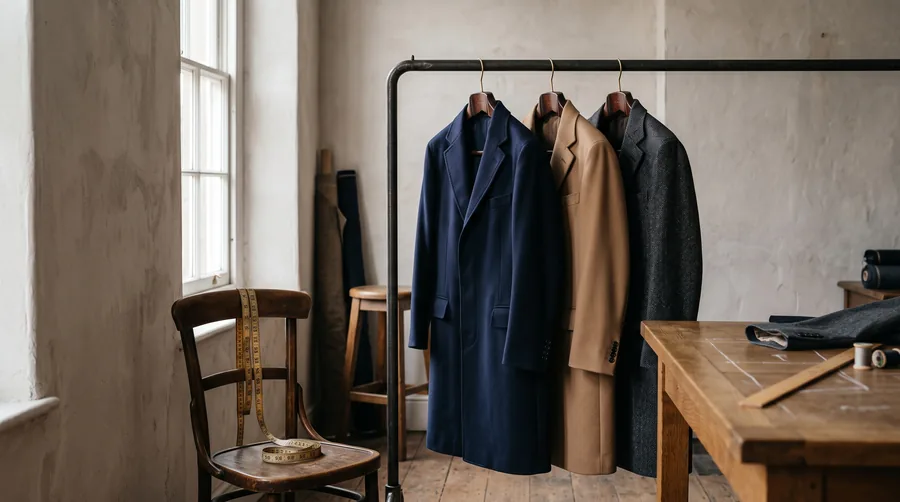
The objects people keep for thirty years
They have four properties in common, and being expensive is not one of them.
At a glance
- Property one
- It can be repaired by somebody
- Property two
- It improves with use rather than degrading
- Property three
- It has a single job and does it
- Property four
- It was in daily use from the start
Ask anyone to name the objects they have owned for thirty years and the list is short, specific and rarely expensive. A pan. A desk lamp. A coat. A knife. A wooden spoon somebody made. The pattern in those lists is consistent enough to be useful as a buying rule.
It can be repaired
Not by the manufacturer, necessarily. By somebody. A cast iron pan can be stripped and reseasoned by anybody with an oven. A leather bag can be restitched by a cobbler. A mechanical watch can be serviced by a watchmaker in any city. A wooden chair can be reglued.
Against that, consider the categories where repair is structurally impossible: anything glued rather than fastened, anything whose function depends on a sealed electronic module, anything moulded as a single piece. Those objects have a fixed life decided at the factory, and no amount of care extends it.
It improves with use
Some materials degrade with handling and some improve. Vegetable tanned leather darkens and softens and takes the shape of what it carries. Cast iron and carbon steel build a seasoning layer that makes them better every year. Linen softens. Solid wood develops a patina from the oils in hands. Brass and copper acquire a surface that is arguably the point of buying them.
Set against: chrome plating, which can only wear through. Non stick coatings, which have a fixed number of cycles. Veneer, which can only chip. Gloss lacquer, which can only scratch. These are not bad materials, they simply have a best day and it is the first one.
Buy the materials that have their best day in year ten.
It has one job
Multifunction objects fail at the joints between functions and they fail early, because the compromise that lets one object do three things makes it worse at all three. The sofa bed is the standard example and the principle runs the whole way down: the combined tool, the appliance with eight programmes, the chair that also stores things.
Single purpose objects also earn their keep in a way that is easy to verify. A thing that does one job either gets used for that job or it does not, and the answer becomes obvious within a month rather than being disguised by the other two functions.
It was in daily use from the start
This is the property that surprises people, because the instinct is to protect a good object. An object kept for best is an object that never becomes yours. It stays new, which in a possession means it stays unfamiliar, and unfamiliar things are the first to be sold, given away or left in a cupboard.
The objects that survive thirty years were used on the first day and every day after. The wear on them is the reason they are still there, because wear is what converts a purchase into a possession.
The buying rule this produces
- Before buying, name the person or trade who could repair it. If nobody, buy the cheap version and expect to replace it.
- Ask what the material does in year five. If the answer is anything other than improves or stays the same, adjust the price you are willing to pay.
- Count the functions. More than one, and look for the version that does the main one properly.
- Decide when you will first use it. If the answer is when the right occasion comes, you are buying an ornament, which is fine as long as that was the intention.
Spotted an error? Tell the desk