Loewe Spring-Summer 2027: cloth against the skin, Spanish Baroque in the detail
Jack McCollough and Lazaro Hernandez build a wardrobe for women and men around how clothes feel and how people live. At Loewe, colour blocking meets Spanish Baroque and leather stays at the centre.
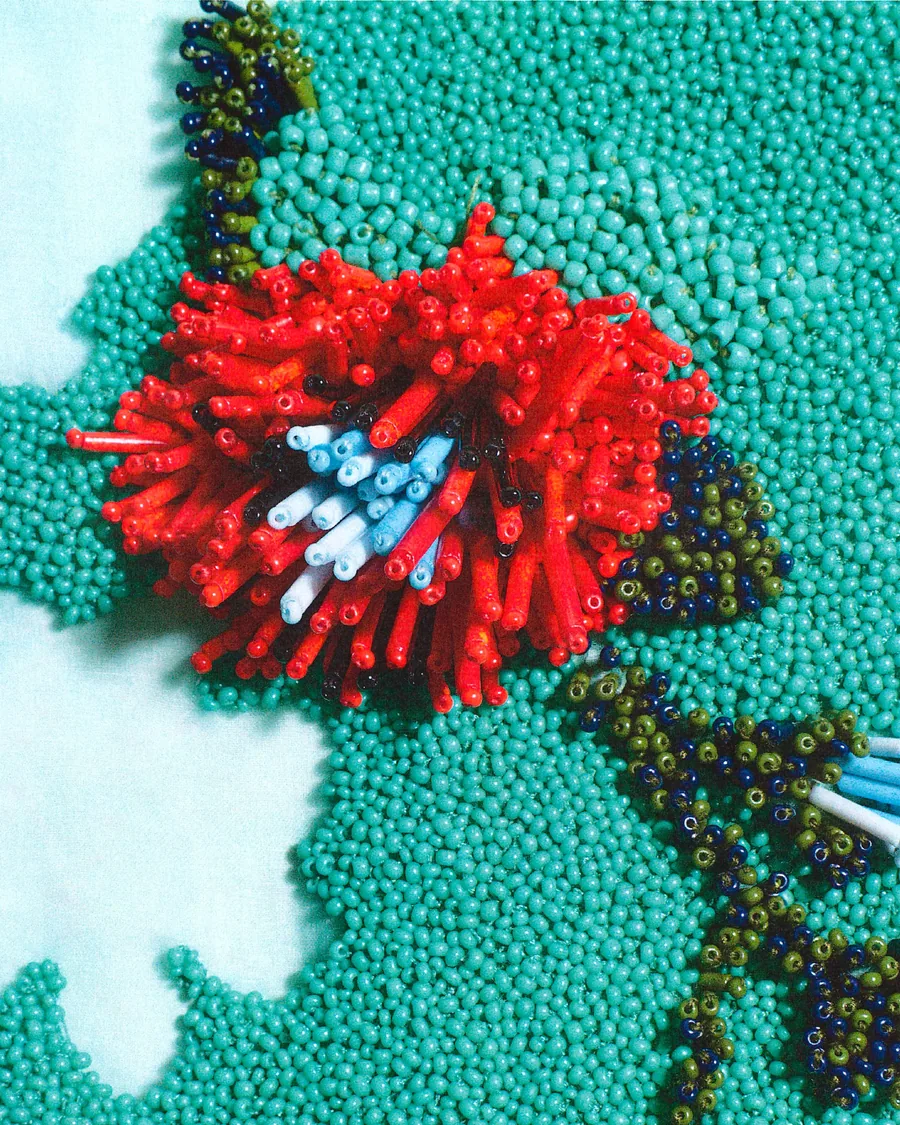
Photo: Loewe
At a glance
- Collection
- Loewe Spring-Summer 2027
- Design
- Jack McCollough and Lazaro Hernandez
- Wardrobe
- Women's and men's
- New in leather
- The Pasito bag and the Puzzle Charm
- From the archive
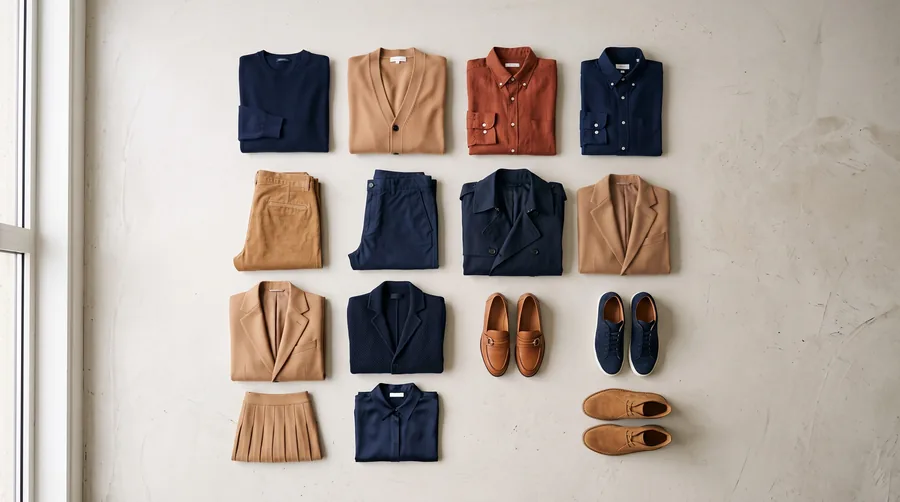
- A suede blazer after the first Loewe garment, 1960
- Materials named
- Nappa leather, suede, silk, chiffon, satin, glass beads
The Spring-Summer 2027 collection at Loewe starts from the body rather than from the image. The design duo Jack McCollough and Lazaro Hernandez ground a feminine and masculine wardrobe in physicality: the sensation of cloth against the skin and the rhythms of real life. Around that core two ideas meet. A colour block spirit runs into Spanish Baroque, and pragmatism keeps nodding to the allure of drama.
An American youth, recut
The American youth of the designers supplies the archetypes. Polos are cut and worn backwards on the body. A basketball jersey gives its shape to a chiffon slip dress fringed with beads. Collars catch reflections of sunglass resin, and silk anoraks are worn directly against the skin.
Spain in colour and ornament
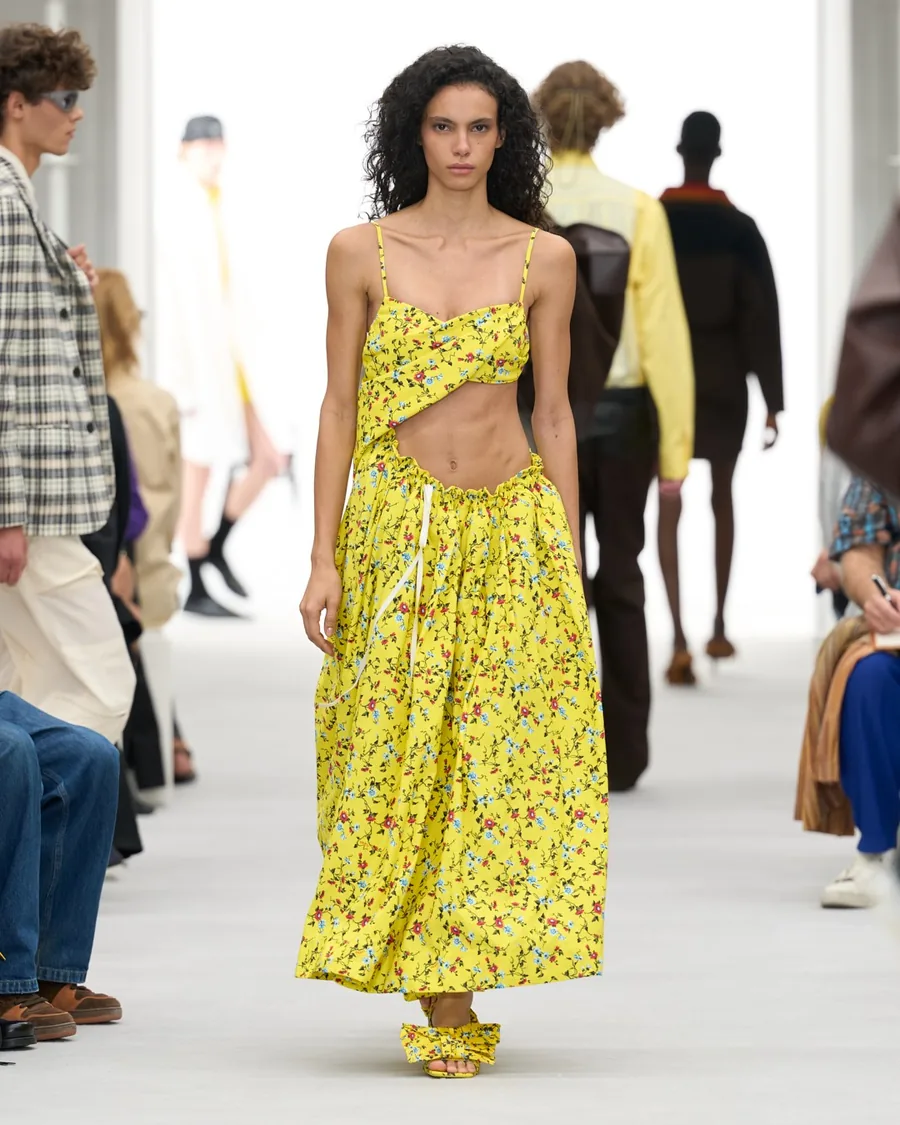
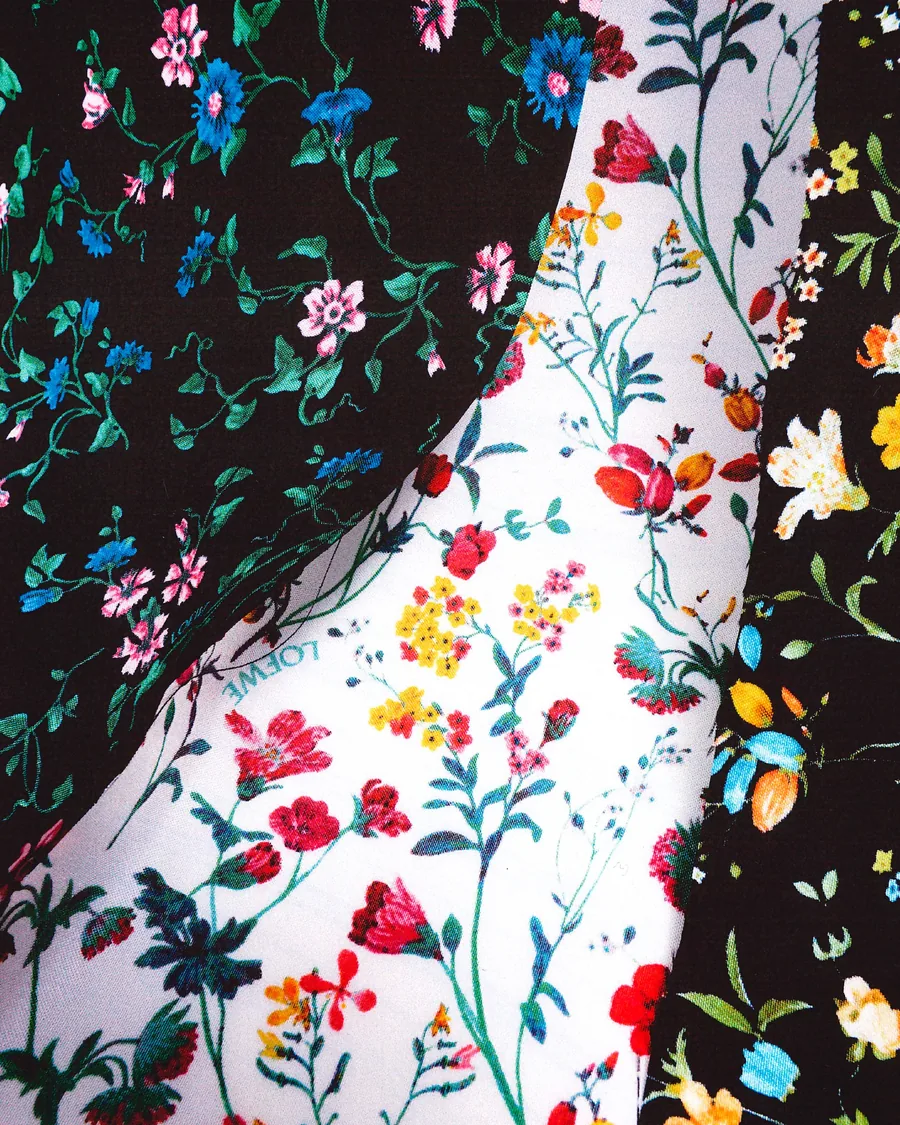
The Spanish heritage of the house is embraced in the colour, which runs from vivid to faded patina and bleached hues, and in the ornament. Baroque flourishes spring from decoration or open out at the waist, and satin scarves flare from traditional taleguilla trousers, the close fitting trousers of the bullfighter.
Colour here is as much a material decision as a visual one. Faded patina and bleached hues read like cloth that has already lived a summer or two, which suits a wardrobe built around wear rather than display, and it means a piece looks less dated when the season that launched it has passed.
Leather, old and new
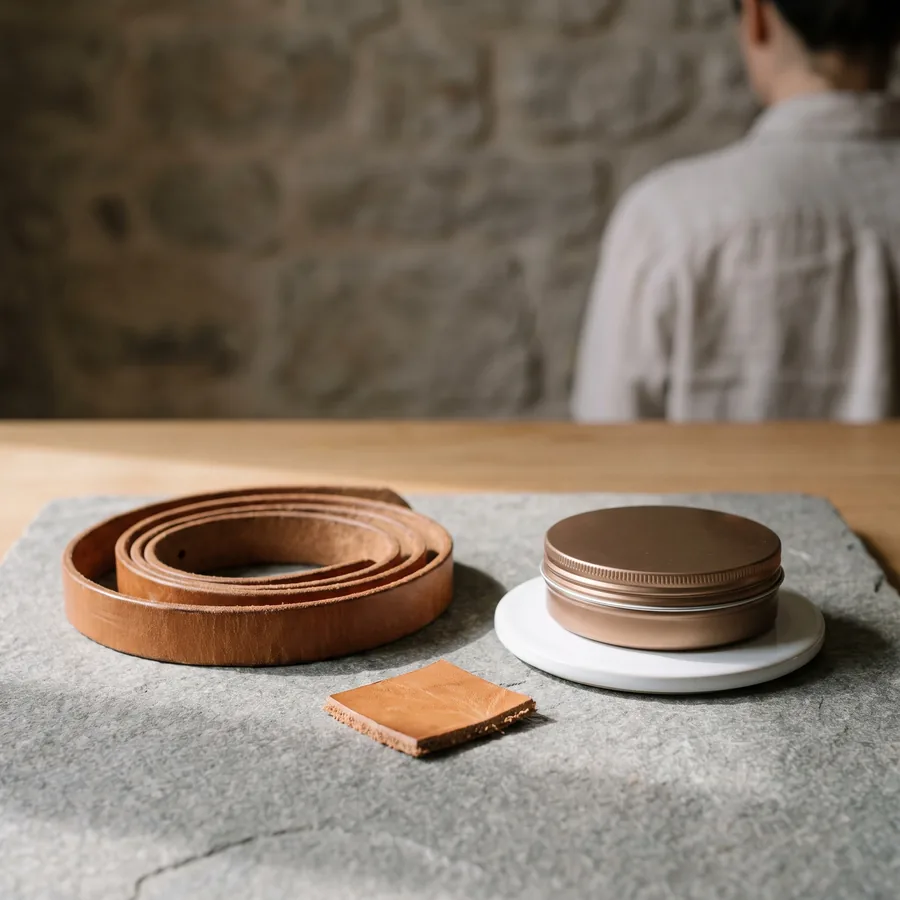
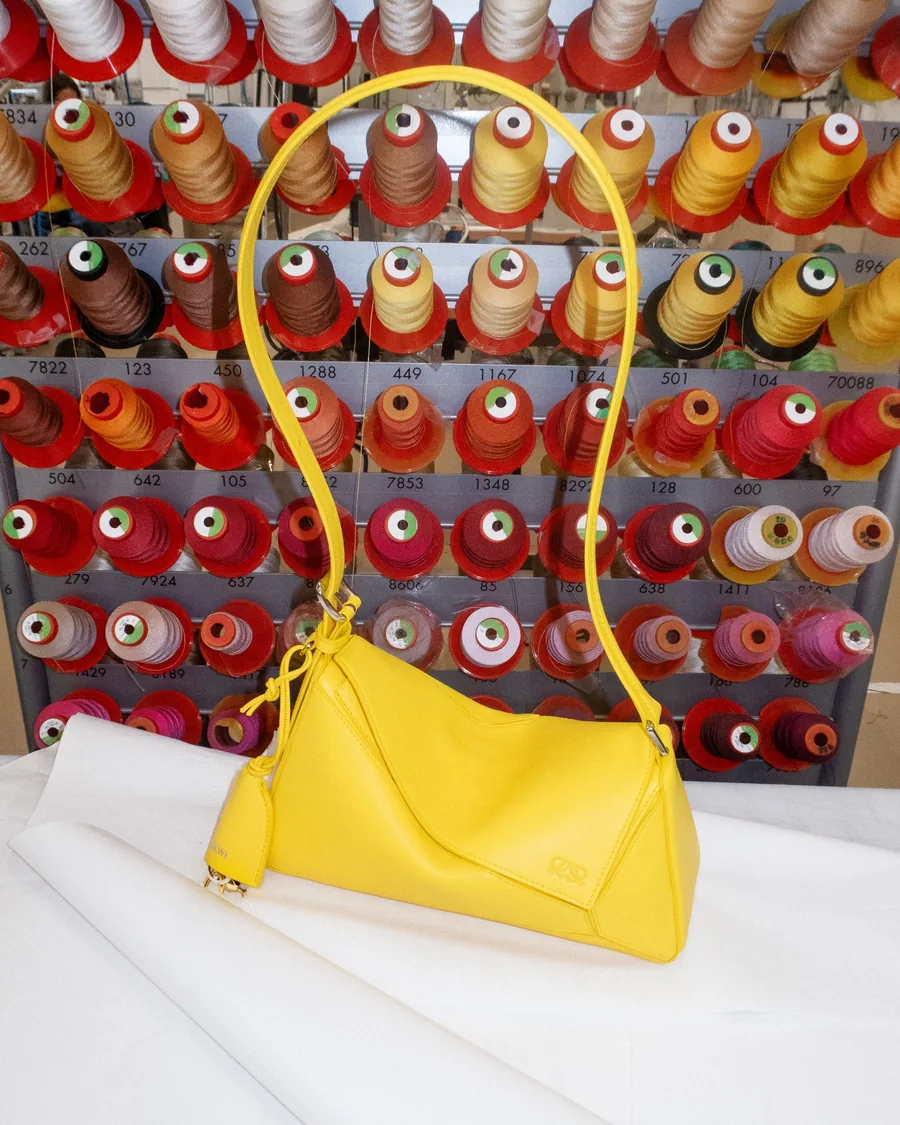
Leather remains the centre of gravity. The new Pasito bag and the Puzzle Charm join the leatherwork icons of the house. A suede blazer revisits the first garment Loewe created, in 1960. Silk ties read like souvenirs of a trip through the storied past of the house, and new expressions of its celebrated nappa leather shape short trapeze dresses.
Nappa deserves a moment, because it is the leather most often named on a label and least often explained. The word describes a soft, supple leather, and how well a nappa piece ages depends on the hide and on the finish far more than on the word itself. Our material file on leather sets out how to tell the grades apart in a shop.
Summer weight
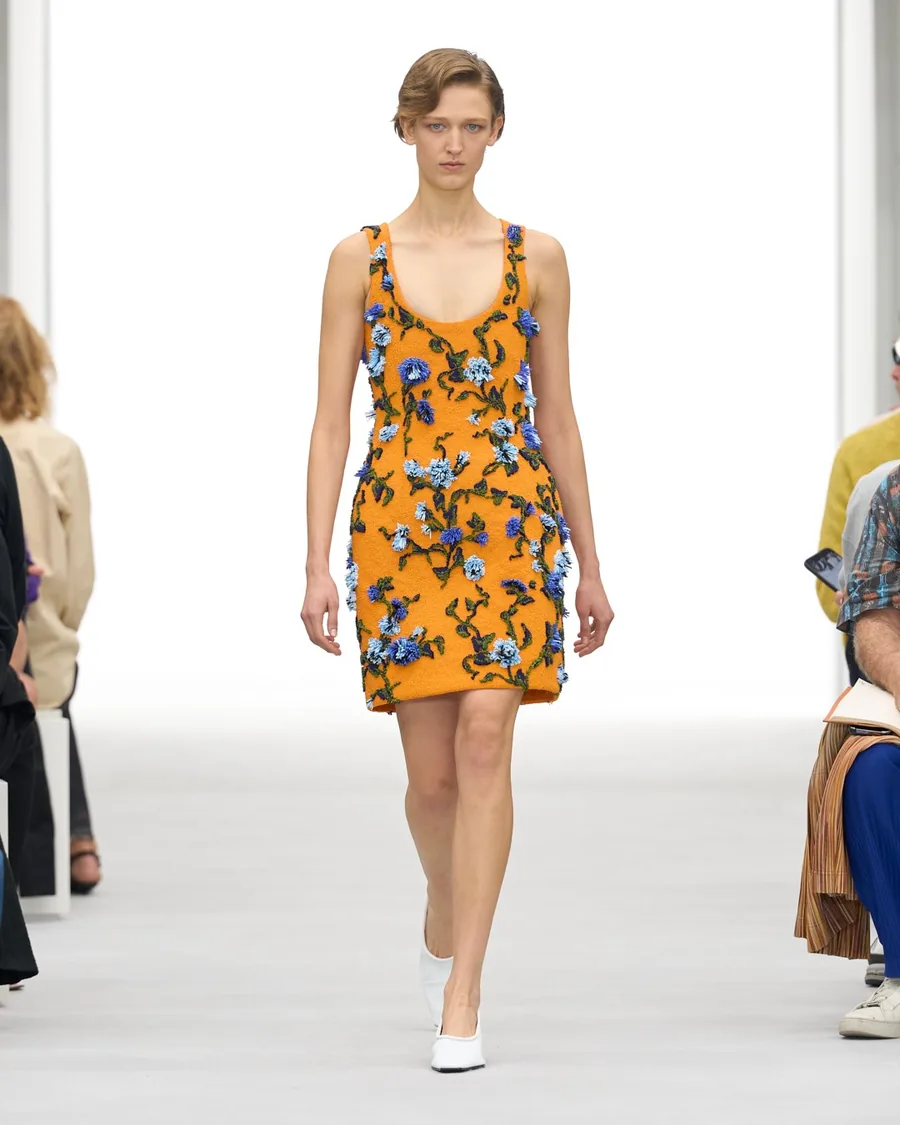
Lightness runs through the rest of the collection: striped jackets, ample shirt dresses, skirts and dresses woven with glass beads. Beadwork of that kind adds weight and movement to a light dress, and it asks for flat storage rather than a hanger, which is worth knowing before you buy. Clothing and accessories are shaped by how the wearer lives and breathes, and the house frames its vocabulary as a way for each person to anchor their stylistic audacity in their own story.
The reading
For a buyer, the instructive part of this collection is its order of priorities. Feel first, image second. A garment designed around how cloth sits on the skin tends to be a garment that gets worn, and a garment that gets worn is the only kind that ever pays back its price. The beaded and Baroque pieces will photograph best. The suede blazer and the nappa are the ones to look at if you want something still in rotation in ten years, and the instrument below shows what that does to the real cost.
Spotted an error? Tell the desk