Stone · Corundum, coloured by trace elements
Sapphire and ruby
The same mineral in every colour, second only to diamond in hardness, and treated by heat far more often than anybody mentions.
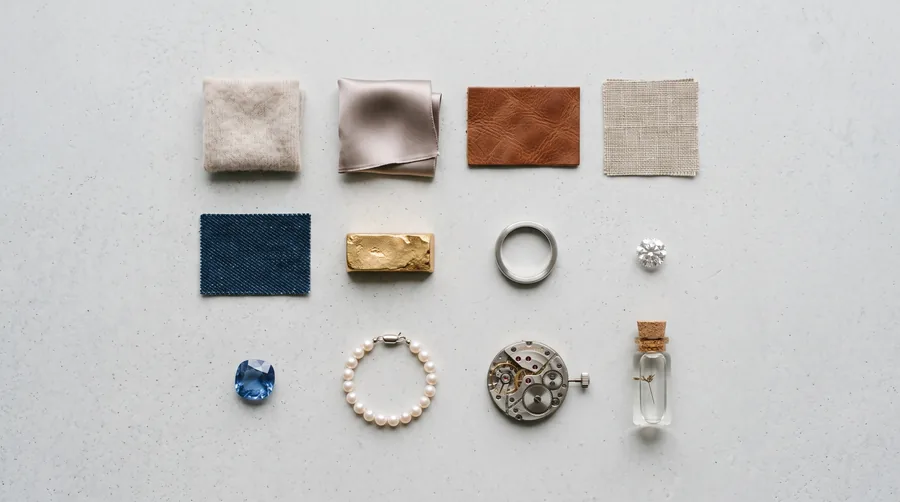
One mineral, every colour
Corundum is colourless when pure. Traces of iron and titanium produce blue, chromium produces red, and combinations produce yellow, green, pink and the orange pink called padparadscha. Red corundum is called ruby and everything else is called sapphire, which is a naming convention rather than a mineralogical distinction.
Why colour beats clarity here
In diamond, clarity is graded strictly because a colourless stone shows everything. In sapphire, inclusions are expected, and a stone with superb colour and visible inclusions is worth far more than a clean stone with weak colour. Silk, which is fine rutile needles, can actually improve a stone by scattering light and softening the colour, and it is the basis of the star effect in cabochon cut stones.
The heat question
Most sapphire and ruby on the market has been heated, often to well over 1,500 degrees, which improves colour and dissolves some inclusions. It is stable, permanent and entirely accepted, and it must be disclosed. Unheated stones of good colour command large premiums and require laboratory certification to establish, because the evidence is microscopic.
The treatments that matter are the others. Diffusion pushes colour into a surface layer only, so a repolish can remove it. Glass filling puts lead glass into fractures, which makes a poor stone look good and leaves it vulnerable to ordinary jewellery repair heat. Both are legal, both must be disclosed, and both should change the price dramatically.
Origin, which carries real money
Kashmir blue, Burmese pigeon blood red and Ceylon cornflower are origin descriptions that carry enormous premiums, and origin determination is done by laboratories from trace element chemistry and inclusion patterns. It is a probabilistic judgement rather than a certainty, and two respected laboratories occasionally disagree, which is worth knowing before paying an origin premium.
Treatment, and what it does to value
Ask the question directly. An honest seller answers it immediately.
How to check it
- Ask directly whether the stone is heated, and ask for it in writing on the invoice.
- View in daylight and in incandescent light. Some blue sapphires go inky under artificial light, which is a real defect and rarely mentioned.
- Look for colour zoning, bands of different saturation, by looking through the side rather than the table.
- For anything over a few thousand, insist on a report from a recognised laboratory. Treatment and origin are not eye visible.
Care
- Hard and durable, but it cleaves and chips at the girdle like anything else. A bezel or protected setting for daily wear.
- Ultrasonic cleaning is safe for untreated and heated stones, and unsafe for anything fracture filled.
- Keep away from jewellers heat during repairs if the stone is filled. Tell the jeweller before any work.
- Store separately. Corundum at hardness 9 will scratch almost everything else in a box.